
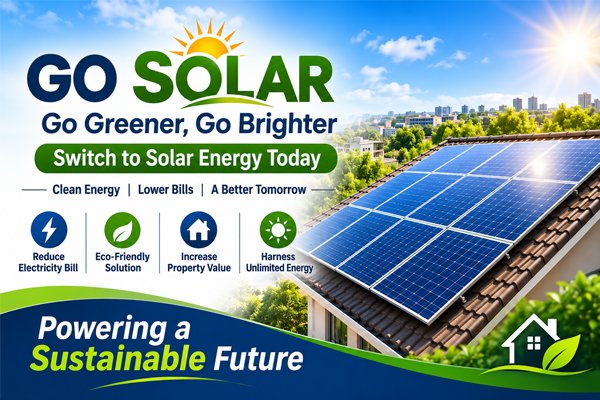
What is a Solar Energy House?
The solar power house is equipped with solar panels that harness energy from the sun to produce electric energy, which is used to run various devices at home, charge batteries or supply electricity to the power grid, depending on how the system is set up.
A good solar power system will contribute towards ensuring that there is proper utilization of renewable energy and reduction of electric bills for the residents.
How Does a Home Solar Power System Work?
A residential solar power system working involves the following simple steps.
1. Solar Panels Capture Sunlight
Solar panels are the most important component of a solar energy house. Solar panels have special cells for converting sunlight into direct current electricity.
As sunlight falls on the panels, electricity generation begins. The amount of electricity generated depends on sunlight, panel size, roof direction, shade, and weather.
2. Solar Inverter Converts Electricity
Solar panels generate electricity in DC form, while most domestic appliances use electricity in AC form. At this point, a solar inverter is used to convert DC electricity into AC electricity, regulating its flow for domestic appliances.
3. Solar Electricity Runs Household Appliances
Solar electricity can be used to run household appliances like lights, fans, televisions, refrigerators, and computers. In situations where there is not enough solar energy, a connected house gets extra electricity from the main source.
4. Extra Electricity Is Exported to the Grid
In cases where there is extra solar electricity generated by the solar panels during sunny periods, the electricity can be exported to the power grid through the process of net metering.
5. Batteries Can Store Solar Energy
A battery is another way of storing surplus electricity that can be utilized later. The stored energy can run selected household appliances during the night or when solar panels produce less electricity.
However, not every solar system needs batteries. Their use depends on backup needs, budget, and the type of solar system.
Types of Solar Power Systems for Homes
Homeowners can choose from three common solar systems:
On-grid: Connects to the electricity grid and helps reduce electricity bills.
Off-grid: Works independently and uses batteries for power backup.
Hybrid: Combines grid connection and battery storage for backup.
The choice depends on power needs, roof space, power cuts, and budget.
Benefits of Installing Rooftop Solar at Home
Benefits of having a residential solar power system include:
Reduced power bills: Produce your own electricity from the sun to lower your grid power consumption.
Environmental friendly: Utilize renewable power and minimize fossil-fuel power.
Long-lasting power: The solar panel could generate electricity for many years provided it is well maintained.
Electricity freedom: Decrease dependency on traditional power sources.
Government assistance: If eligible, you may qualify for certain solar power roof subsidies according to the government scheme.
Conclusion
A solar house can be said to be one of the most effective means through which energy from the sun can be captured and converted to electricity, for use in powering various devices. Depending on the kind of solar system being used, additional energy can be sold back to the power grid or stored in batteries.
Clean energy and saving electricity bills can easily be achieved through rooftop solar. Joint Solar helps homeowners to get the right solar energy system based on their energy requirement and other factors.
Before installing a home solar system, check your monthly electricity use, available roof space, and need for power backup to choose the right system.